Showing posts with label poetry. Show all posts
Showing posts with label poetry. Show all posts
Monday, November 22, 2010
Poetry and Magic in Black or White
"As with magic, poetry is black or white, depending on whether it serves the sub-human or the superhuman." —René Daumal


Tuesday, October 12, 2010
Across Miles of Milky Starlight

The way you speak to me
Across these miles of milky starlight
Is also magic, poetry, prayer.
—from "En Passant" by Rebecca Lu Kiernan
Sunday, April 18, 2010
Poetry, Magic, and the Omnipotence of Thought
"Poetry and magic ... are based on a belief that thought can create its own reality—which Sir James Frazer in The Golden Bough called the theory of 'the omnipotence of thought' and which Freud, in his comment on Frazer's anthropological investigations in Totem and Taboo, traced back to the child's power, with an outcry of desire, to make the missing mother mysteriously appear again and offer the all-providing breast. It is no accident, then, that so many poems, from the Odyssey right up to Joyce's great prose-poem, Finnegans Wake, contain magical 'invocations' summoning the goddess to appear at once."
—Robert Anton Wilson, Decadance
—Robert Anton Wilson, Decadance
Saturday, January 16, 2010
Poetry and Context
"The word that is magical in a particular line of poetry may be quite inert in a different sentence; the construction that is merely a bungle in one context may serve a powerful expressive purpose in another."
—Graham Goulden Hough, Style and Stylistics (1969)
—Graham Goulden Hough, Style and Stylistics (1969)
Thursday, August 13, 2009
Milton's Time-Warping Incantations
"[John Milton's] poetry acts like an incantation. Its merit lies less in its obvious meaning than in its occult power, and there would seem at first to be no more in his words than in other words. But they are words of enchantment. No sooner are they pronounced than the past is present and the distant near. New forms of beauty start at once into existence, and all the burial-places of the memory give up their dead."
—Thomas Babington Macaulay, Essay on Milton
—Thomas Babington Macaulay, Essay on Milton
Friday, April 10, 2009
Mesopotamian Magic
"Magic language is usually distinguished from ordinary language. There are, in principle, three ways to achieve such a distinction. The first is to use a sacred language. The second is to use poetic, heightened language. . . . A third possibility is almost restricted to magic or ritualistic uses of language, and that is Mumbo-Jumbo. All three possibilities are used in Mesopotamian magic."
—I. Tzvi Abusch, Mesopotamian Magic, 1999
—I. Tzvi Abusch, Mesopotamian Magic, 1999
Sunday, March 15, 2009
The Language of Poetry as a Minor Magic
"To write a poem is to practice a minor magic. The instrument of that magic, language, is quite mysterious. We know nothing of its origin. We only know that it branches into different languages and that each one of them has an indefinite and changing vocabulary and an indefinite cipher of syntactic possibilities."
—Jorge Luis Borges, quoted in The Critical Poem by Thorpe Running
—Jorge Luis Borges, quoted in The Critical Poem by Thorpe Running
Wednesday, February 25, 2009
Unclosing the New Time of Roses and Lilies
Monday, July 14, 2008
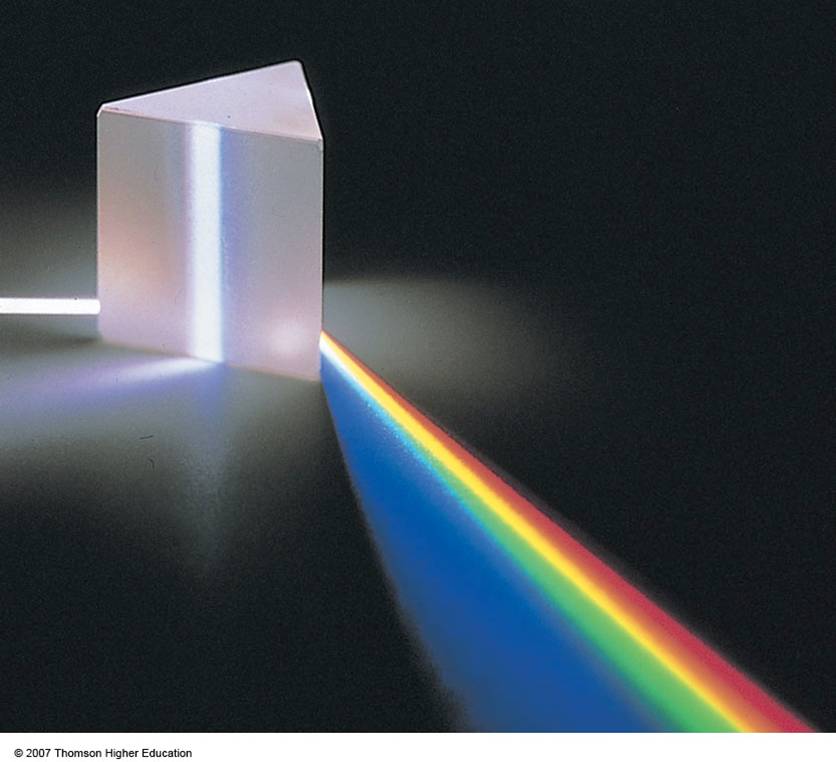
Prism
"Magical words . . . are a prism of the universe; they reflect, decompose, and recombine all its wonders. The sounds imitate colours, the colours merge into harmony. The rhyme, rich or strange, swift or lingering, is inspired by poetic insight, that supreme beauty of art and triumph of genius which discovers in nature all secrets close to the human heart."
—Madame de Staël, Corinne, or Italy (1807), translated by Sylvia Raphael (1998)
—Madame de Staël, Corinne, or Italy (1807), translated by Sylvia Raphael (1998)
Subscribe to:
Posts (Atom)