Showing posts with label sigil. Show all posts

Monday, April 9, 2012

A Sigil Puzzle


Here's a sigil puzzle from -- of all things -- a children's magazine from 1873. The sigils communicate a well-known aphorism with celestial inclinations.

Answer:

Reading from top to bottom, then left to right: "To err is human; to forgive, divine." From Our Boys and Girls Monthly, February 1873, p. 138.

Tuesday, January 5, 2010

Magic Blueprinting

Alvo Stockman has reinvented the mystical diagrams of the ancients into modern flowcharts, via his Magic Modeling Language. Peter Prevos discusses the concept of magic blueprints, but first explores how magicians have both used and avoided written language through the centuries:
The history of magic and the history of language go hand in hand. Language started with verbal communication, supported by dance, painting and rituals. Ancient shamans passed their craft on to the next generation in this very same way, initiating their apprentices step by step through one-on-one instruction via words, dance, painting and ritual.

Writing as we know it first developed about 6,000 years ago in present day Iraq. From then on, people wrote about every aspect of their lives, including magic. But, no writing about how to perform magic has ever been found in ancient documents. It seems that the pact of secrecy between magicians prevented them from committing their knowledge in permanent form. It is interesting to note in this respect that magicians have always been at the forefront of technology when it comes to creating the illusion of magic. When it comes to explaining secrets, however, magicians are a lot more conservative. The first magic book was published more than five millennia after the invention of writing! Since then, writing has been used prolifically by magicians to teach each other about their secrets and initiate new magicians.
Continue reading Prevos' discussion here.

Saturday, April 4, 2009

Sigils, Ancient and Modern

"Nothing definitive has been written concerning the relationship between mysticism and technology." —The Bent World: Essays on Religion and Culture, 1979
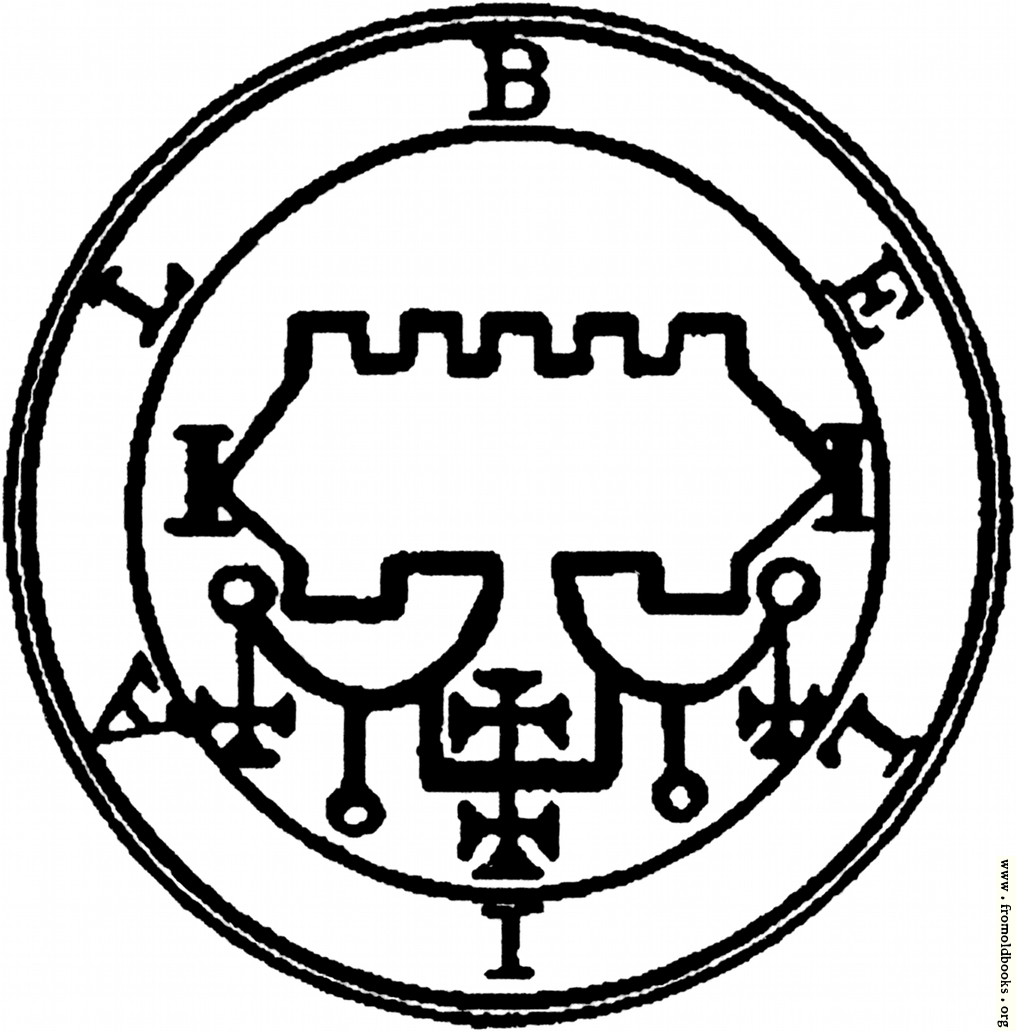
Sigils are the mystical circuitry diagrams of old, and it would seem the world of science isn't immune to their influence. Compare the iconography of the logo of Space Technology Laboratories (pictured left; uncropped image here) to the occult sign of Azazel (right). (Azazel, by the way, is "the most mysterious extrahuman character in Jewish sacred literature.") Both images economically intersect arrows, plus signs, x-signs, zig-zags, and curves.

Indeed, it is believed that sigils inspired the design of modern circuit boards. No wonder, then, that artists like Theo Kamecke use circuitry to create sculptures evocative of ancient Egyptian magic.
"In point of fact, the devices that you see in this era, the ones that rely on electrical impulses and circuitry, they are an outgrowth of the original, primal magical urge." —J. A. Wynn, Tales of the Fall, 2008