"Oddly, alchemy seems to work with texts in just the same way as it is meant to work with matter . . . Titles, plots, all of the elements which for us make a text what it is give way to an alchemical process perhaps best described as an aura. . . . [M]agic and literature are the same thing. Enchanting, the text is, quite literally enchanted."
—Amy Wygant, The Meanings of Magic (2006)
Showing posts with label alchemy. Show all posts
Showing posts with label alchemy. Show all posts
Tuesday, August 17, 2010


Wednesday, March 31, 2010

Sunday, August 17, 2008
Coldpot

Delving through dusty old tomes in search of ancient expressions of enchantment, we noticed that one word in particular seems the very essence: Coldpot! With the purity of a singing bowl, this mystic word resonates alchemy and conjures images of a witch’s cauldron. Recalling the “cold pot” of metallurgy, this odd compound word fuses a rounded form (“pot”) with a degree of intensity (“cold”), suggesting alchemical coagulation.[1] The more we studied this unusual word coldpot, the more magic we discovered within it. Indeed, coldpot is brimming with expectations, unlikelihoods, fulfillments of high commands, and even a dollop of danger.
Like black holes bending the very fabric of space, cold pots are famous for disrupting the flow of time. Lest you forget, “Nothing makes time pass more slowly than waiting for a cold pot to boil.”[2] The quaint folk wisdom that a watched pot won’t boil actually speaks to the “observer effect” in physics, in which the act of witnessing changes the beheld phenomenon. It’s as if the cold pot is saying, “Don’t look at me—I’m merely the vehicle for the change you desire. Focus on what’s important, and take all the time you need.”
A cold pot calls for a spark, as the Sufi mystics have said. For “fire is put under the cold pot, not the pot which is boiling over.”[3] Ignition and expectation—both are at the heart of the magic word coldpot. Within the word itself is contained the possibility of highly-unlikely events coming to pass. Statistically speaking, “a cold pot of water could spontaneously come to a boil; it is simply not very likely. But unlikely events are quasi-certain to happen if we wait long enough.”[4] The sparkling occurrence of highly-unlikely events is the very heart of magic.
[1] For example, “a cold pot full of something congealed” is described in The Heirs by G. Y. Dryansky (1978)
[2] This old saying is recalled by Leon Uris in A God in Ruins (2000)
[3] Jalal al-Din Rumi, Tales from the Masnavi (1961)
[4] Herman Daly and Joshua Farley, Ecological Economics (2003)
For a full discussion of coldpot, see our Pentacle Magazine feature.
Friday, June 27, 2008
Hermetic

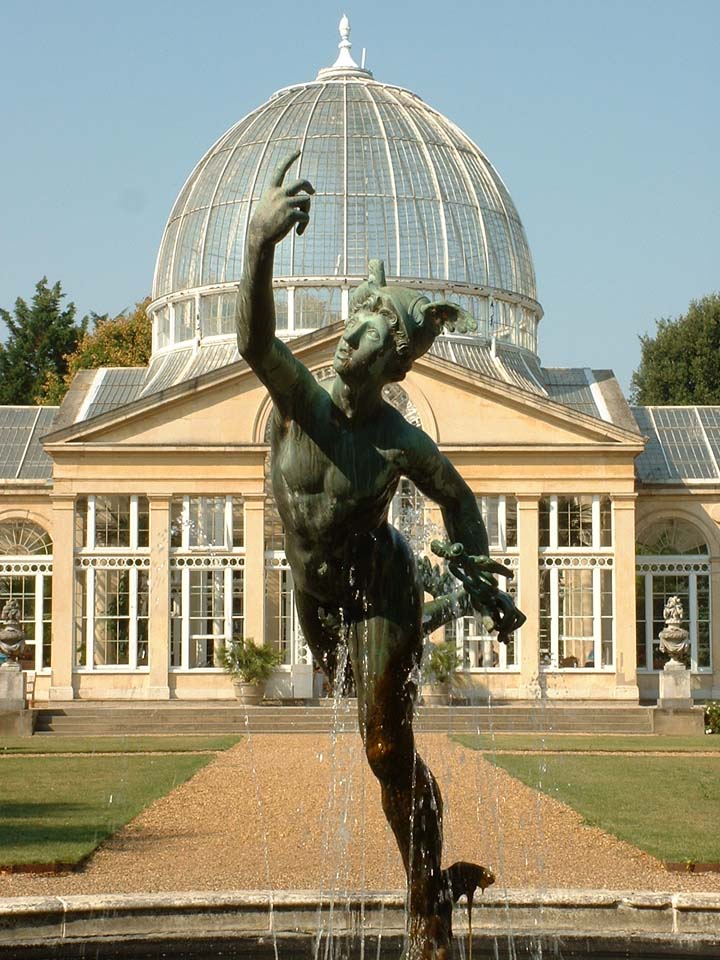
Known as the "master of magic words" [1], Hermes is the Greek messenger god who crosses the boundary between the mortal and immortal worlds. (His Roman counterpart is Mercury.) In his novel The Magic Mountain, Thomas Mann offers a lovely meditation on the magic of Hermes:
‘Hermetic’—I’ve always liked that word. It’s a magic word with vague, vast associations. . . . I can’t help thinking about our old canning jars . . . hermetically sealed jars, with fruit and meat and all sorts of other things inside. There they stand, for months, for years, but when you need one and open it up, what’s inside is fresh and intact, neither years nor months have had any effect, you can eat it just as it is. Now, it’s not alchemy or purification, of course, it’s simple preservation, which is why they’re called preserves. But the magical thing about it is that what gets preserved in them has been withdrawn from time, has been hermetically blocked off from time, which passes right by. Preserves don’t have time, so to speak, but stand there on the shelf outside of time.
—translated by John E. Woods (1995)
For a deeply fascinating and suspenseful exploration of the Hermetic tradition, don't miss the novel Mercurius by Patrick Harpur.
[1] Norman Oliver Brown, Hermes the Thief: Evolution of a Myth, 1990, p. 15.
Subscribe to:
Posts (Atom)