"'Creation,' like 'creative,' is one of those hypnotic words which are prone to cast a spell upon the understanding and dissolve our thinking into a haze. And out of this nebulous state of the intellect springs a strange but widely prevalent idea. The shaping spirit of imagination sits aloof, like God as he is commonly conceived, creating in some thaumaturgic fashion out of nothing its visionary world. That and that only is deemed to be 'originality'—that, and not the imperial moulding of old matter into imperishably new forms. The ways of creation are wrapt in mystery; we may only marvel, and bow the head."
—John Livingston Lowes, The Road to Xanadu, 1927
Saturday, January 17, 2009


Friday, January 16, 2009
Sahara
The word sahara is of Arabic origin. It means “desert.” The vast expanse of an open desert offers a clean slate—an infinitude of creative possibilities, a canvas upon which to paint mirages. Unbounded by names, forms, and even emptiness itself, the world can be anything one wishes. “Sahara is a magic word—‘a sea of sand.’ The desert has always fascinated explorers, geographers, environmentalists, and novelists, who turned to it for inspiration and adventure” (Andrew Borowiec, Taming the Sahara, 2003).
Thursday, January 15, 2009
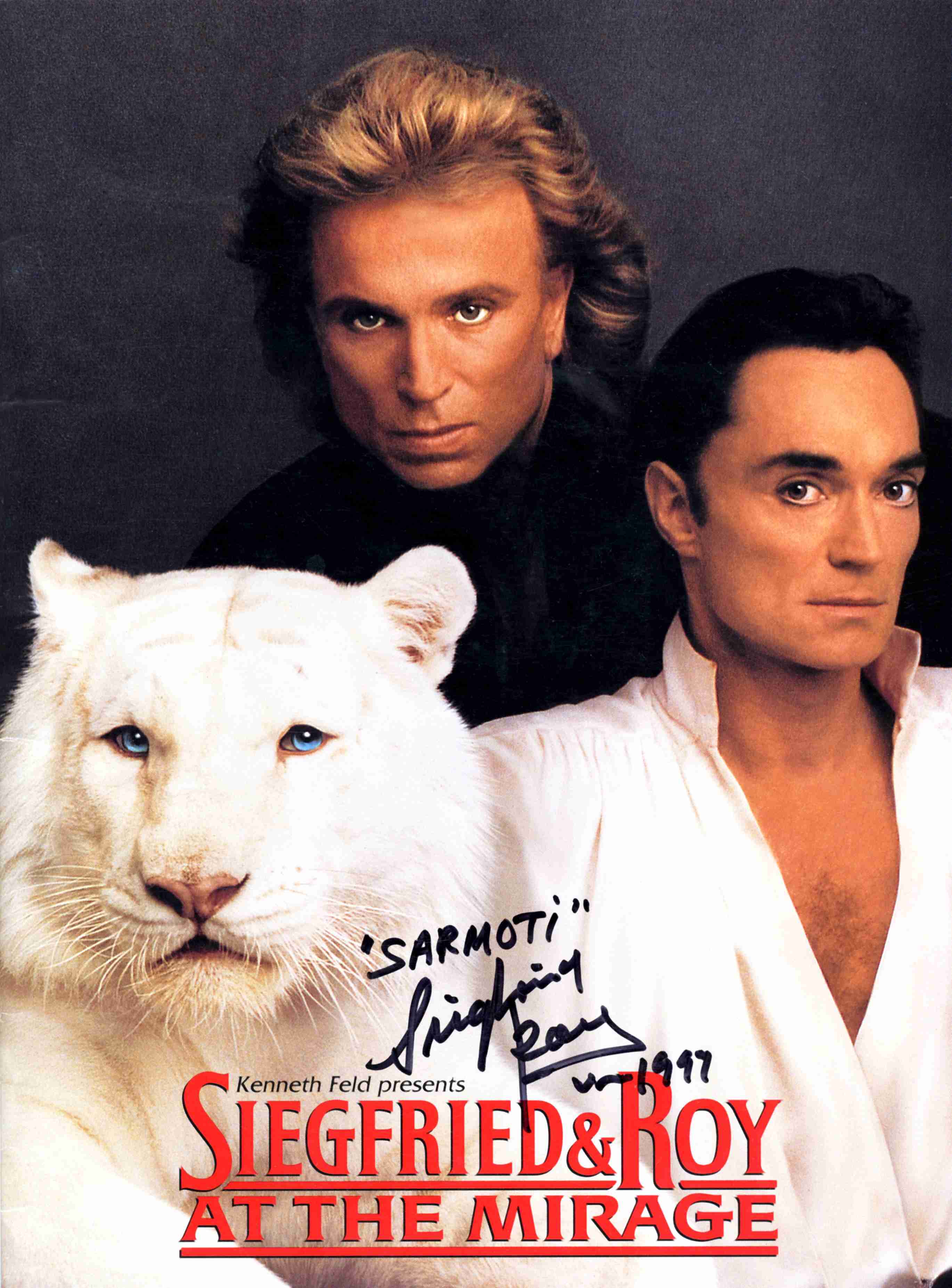
Sarmoti
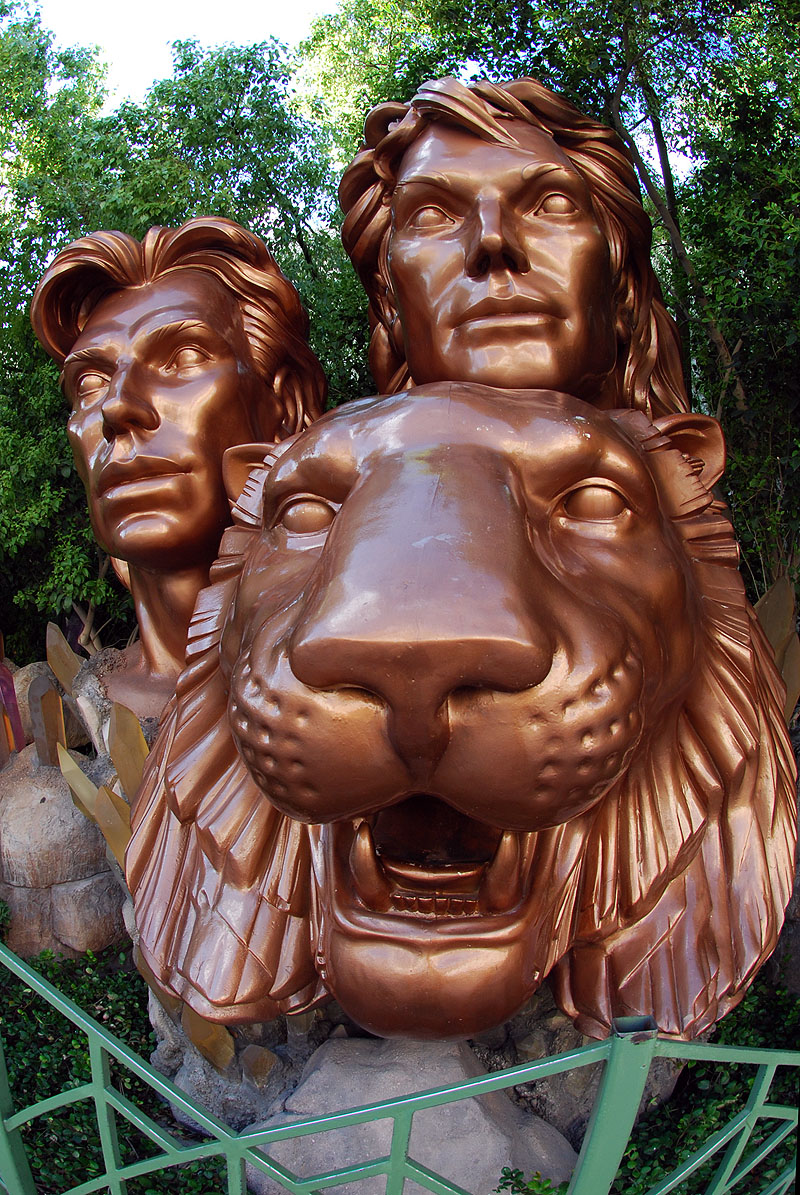
The magic word sarmoti is actually an acronym coined by magicians Siegfried and Roy. It stands for "Siegfried and Roy: Masters of the Impossible." The acronym echoes a Persian word, sarmadi, which means "eternal, perpetual, divine, eternity" (Francis Joseph Steingass, A Comprehensive Persian-English Dictionary, 1992).
(Thanks, Fred, for suggesting today's magic word.)
---
In other news, here's a review of our dictionary of magic words:
Words are inherently magical for the writer—also frustrating, obtuse, enchanting and expressive in various moments and times. We struggle with them, delight in them, and weave them together to form significant combinations. Dictionaries are our friends, lists of synonyms our best buddies, and there are many of us who take simple delight in the well-turned phrase. Craig Conley has given us a gift beyond regard: a dictionary of 720 of the words used by (stage) magicians throughout the ages. Who can forget the shiver of delight we felt when hearing "open sesame" in the tale of Ali Baba and the 40 Thieves? Or the eternal Abracadabra! and Hocus Pocus? Now we know where they originated, with their meanings, in combinations, and source material. But this is no common dictionary! Conley clearly loves words. "Hocus Pocus: These primal, rhyming syllables echo the transcendental incantations of Latin rites, reverberating through hallowed cloisters. They invoke an ancient, unworldly power, especially when enunciated slowly and authoritatively" (p. 327). Highly recommended for anyone with a taste for words.
—Lisa Mc Sherry, Facing North
(Thanks, Fred, for suggesting today's magic word.)
---
In other news, here's a review of our dictionary of magic words:
Words are inherently magical for the writer—also frustrating, obtuse, enchanting and expressive in various moments and times. We struggle with them, delight in them, and weave them together to form significant combinations. Dictionaries are our friends, lists of synonyms our best buddies, and there are many of us who take simple delight in the well-turned phrase. Craig Conley has given us a gift beyond regard: a dictionary of 720 of the words used by (stage) magicians throughout the ages. Who can forget the shiver of delight we felt when hearing "open sesame" in the tale of Ali Baba and the 40 Thieves? Or the eternal Abracadabra! and Hocus Pocus? Now we know where they originated, with their meanings, in combinations, and source material. But this is no common dictionary! Conley clearly loves words. "Hocus Pocus: These primal, rhyming syllables echo the transcendental incantations of Latin rites, reverberating through hallowed cloisters. They invoke an ancient, unworldly power, especially when enunciated slowly and authoritatively" (p. 327). Highly recommended for anyone with a taste for words.
—Lisa Mc Sherry, Facing North
Wednesday, January 14, 2009
The Word-in-Itself
"In the long history of mental development the Word-in-Itself has played manifold parts. The Word has summoned spirits from the shadows or held demons in awe. The Word has been a sacred symbol graven upon the walls of the temple or worn in gold upon the forehead of the initiate. The secret word of Magic has opened treasuries, destroyed kingdoms, made a man of god. The long tale of incantation by means of the Word is not ours to tell; except in so far as the poet and the maker of stories learns too the ancient trick of incantation whereby he liberates imprisoned spirits and through a delicate hocus-pocus opens up charmed realms of fantasy."
—June Etta Downey, Creative Imagination: Studies in the Psychology of Literature, 1999
---
In other news, don't miss our guest blog about magic words at Neatorama.
—June Etta Downey, Creative Imagination: Studies in the Psychology of Literature, 1999
---
In other news, don't miss our guest blog about magic words at Neatorama.
Tuesday, January 13, 2009
There's No Place Like Home
As fans of both ellipses and magic words, we were tickled to find this colorful quotation:
"Saying the magic words 'There's no place like home' may get you out of Oz, but saying 'Oh, it's just ellipsis!' doesn't spirit you away out of the syntactic Narnia that is English grammar."
—Geoffrey K. Pullum, Language Log, Dec. 14, 2007
---
In other news, here's a review of our Magic Words: A Dictionary:
This 352 page dictionary of magic words was a real hoot to review, I had a blast just thumbing through the pages and learning about myths, origins, trivia and other cool stuff. I even learned how to summon zombies and bring big changes into my life. I also found the illustrations and icons to be very helpful with the process.
I must tell you I knew of some magic words from books and movies, but I never imagined there were so many and even how they came to be in the first place. I think this voluminous teacher will go a long way in helping anyone broaden their horizons. I would recommend it to those who enjoy learning. Thanks Craig, for the interesting and informative experience.
—Riki Frahmann, Mystic Living Today
"Saying the magic words 'There's no place like home' may get you out of Oz, but saying 'Oh, it's just ellipsis!' doesn't spirit you away out of the syntactic Narnia that is English grammar."
—Geoffrey K. Pullum, Language Log, Dec. 14, 2007
---
In other news, here's a review of our Magic Words: A Dictionary:
This 352 page dictionary of magic words was a real hoot to review, I had a blast just thumbing through the pages and learning about myths, origins, trivia and other cool stuff. I even learned how to summon zombies and bring big changes into my life. I also found the illustrations and icons to be very helpful with the process.
I must tell you I knew of some magic words from books and movies, but I never imagined there were so many and even how they came to be in the first place. I think this voluminous teacher will go a long way in helping anyone broaden their horizons. I would recommend it to those who enjoy learning. Thanks Craig, for the interesting and informative experience.
—Riki Frahmann, Mystic Living Today
Monday, January 12, 2009
Vatuvi
Vatuvi is the name of a magical axe, used in the agricultural rites of the Trobriand Islands. The word "denotes 'setting up,' 'establishment,' 'firmness,' 'strong grip,' perhaps also a tendency groundwards" (Bronislaw Press, Coral Gardens and Their Magic - A Study of the Methods of Tilling the Soil and of Agricultural Rites in the Trobriand Islands, Vol. II: The Language of Magic and Gardening, 2007).
Sunday, January 11, 2009
A Review
A review of our Magic Words: A Dictionary
by Anthony Marais, author of The Cure
Magic Words is more than a dictionary - it is an impassioned call to writers, magicians and laypeople to bring magic back into their vocabulary. It is, in fact, an incantation calling forth the demons hidden within our speech, and no reader will finish this book without succumbing to its spell.
Let there be no doubt about it: Conley is on a mission to promote literacy, and his love of words possesses the cabbalistic reverence of an alchemist in pursuit of gold. For it is in the meaning of each word, of each letter of each word, that we discover the mysterious powers of language - or, as the author puts it, it is the inherent enchantment of the word that gives literature its magical influence. And this book will influence you in a most magical way.
by Anthony Marais, author of The Cure
Magic Words is more than a dictionary - it is an impassioned call to writers, magicians and laypeople to bring magic back into their vocabulary. It is, in fact, an incantation calling forth the demons hidden within our speech, and no reader will finish this book without succumbing to its spell.
Let there be no doubt about it: Conley is on a mission to promote literacy, and his love of words possesses the cabbalistic reverence of an alchemist in pursuit of gold. For it is in the meaning of each word, of each letter of each word, that we discover the mysterious powers of language - or, as the author puts it, it is the inherent enchantment of the word that gives literature its magical influence. And this book will influence you in a most magical way.
Subscribe to:
Posts (Atom)