A magician's assistant is sawed in half. One woman, two parts. The phenomenon recalls those mystical Greek philosophers, the Pythagoreans. They would have recognized in the magician's assistant the principle of the female Dyad—the boundless number Two, governess of the concept of separation. Without an assistant, you see, the magician (who the Pythagoreans would've called the Monad—the Primordial One) is one-sided and therefore dimensionless. It takes the Dyad to establish dimensionality, just as a 3-D film is composed of two images, one for each eye, that lend endless perspective. So the Dyad takes the one flat surface the magician has to offer, and—voilà—out pops a 3-D box. Sure, she can fit inside any box, but she can't truly be contained. She can be cut in half, but she's ultimately unbreakable. The Dyad is our path to the infinite, since she introduces the property of boundlessness. She's a crucial contrast to the strict limit of the magician's Primordial One.
The Pythagoreans called the Dyad "the Goddess of Primordial Matter" because her formless fertility provides the foundation of creation—the generative source of being. She is the pregnant Silence which precedes the magic Word. Whereas the Monad is "something," the Dyad is "the limitless power to be anything." This power of plurality was also named Rhea ("The Ever-Flowing," hence our word "rhythm"), because through her tension of opposites she governed recurring motion and thus created a fluid, demarcatable presence known as Time out of the Monad’s monolithic, immeasurable Eternity.
The magician's assistant—the great number Two who brings infinite dimensionality to life. Three cheers for "Women in Boxes"!
Saturday, February 28, 2009


Friday, February 27, 2009
Pumpernickel Pickle
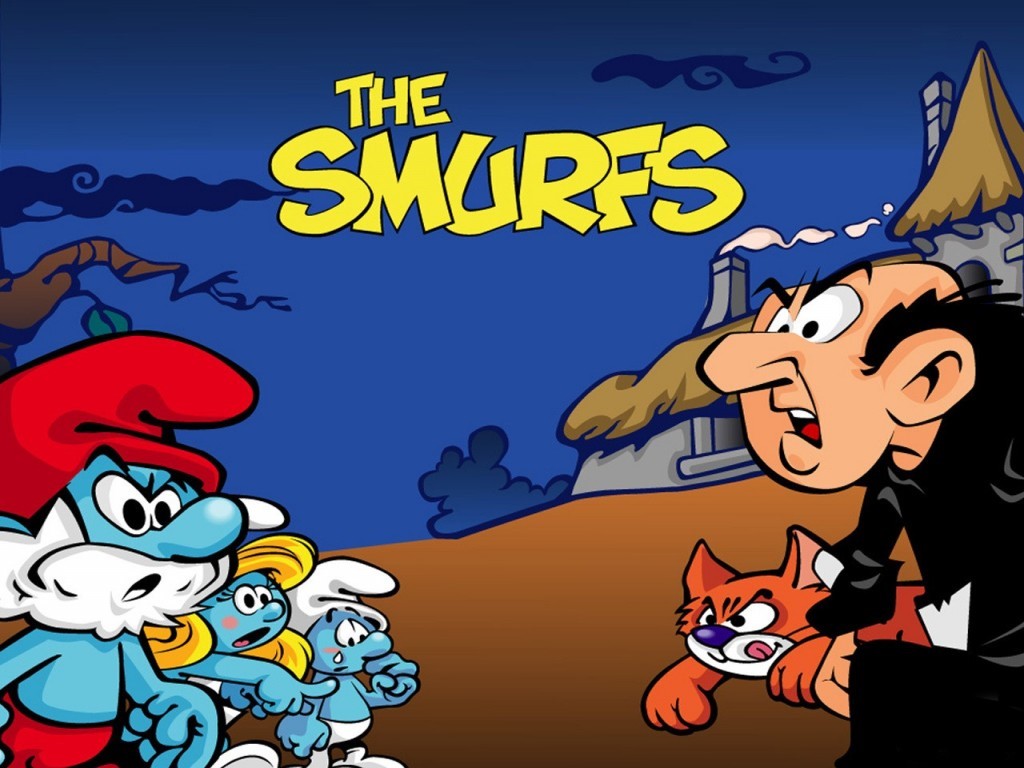
"Pumpernickel Pickle" is the magic phrase to conjure a gift-granting genie in the cartoon series Smurfs (1981).
Thursday, February 26, 2009
Salamander
Brian asked me to stand in the middle of the stage while he said the magic word, which was “Salamander” if I’m not mistaken. After he said the word, I saw myself split into two people–like identical twins.In mythology, the newtlike salamander is created from flames. As a magic word, salamander evokes the elemental spirit of fire. The first two syllables, salam, echo the Arabic word meaning “peace.”
—Pepe Greenway, “Magic Show”
Wednesday, February 25, 2009
Unclosing the New Time of Roses and Lilies
Tuesday, February 24, 2009
Penguin
Magician Will Henry explains why he likes to use "penguin" as a magic word during performances for children:
Children always love to think they are creating magic through the use of a magic word. Now you shouldn't use just any old word. Most magicians use "Hocus pocus" or "abracadabra." I have found better success using just some random crazy word, like "Penguin" or "I love turtles." Most everyone is expecting a magic type of phrase, so when you blurt out a random word or phrase, it catches him or her off guard. Children love silly and it's always good for a laugh.
Monday, February 23, 2009
Zoobay
Zoobay is a pseudo-Buddhist magic word invented by humorist Peggy Sherman. In her “Fact Free Fables,” Sherman explains that: “Monks residing on the east side of the Himalayan foothills used the magic word ‘Zoobay’ when they wanted rain to fall in particular areas of crops but not on their homes. This absurd wish for a specific rain pattern called for some fairly impressive magic. The practice of chanting ‘Zoobay’ at dawn during drought season went on for dozens of years before the High Council of Monks decreed that it was improper for monks to use magic words.”
Sunday, February 22, 2009
Nomme Domme
In the folklore of West Cornwall, England, "Nomme Domme" was a name that spirit-quellers used to address and obtain power over ghosts. The name is undoubtedly a corruption of the Latin In Nomine Domini ("In the Name of the Lord"). The name was considered "a magical word, very likely the spirit's name among spirits, for old folks held that they acquire new ones quite different from what they bore when in mortal bodies" (William Bottrell, Stories and Folk-Lore of West Cornwall, 1880).
Subscribe to:
Posts (Atom)